Get your patient on Benzphetamine Hydrochloride - Benzphetamine Hydrochloride tablet, Film Coated (Benzphetamine Hydrochloride)
Benzphetamine Hydrochloride - Benzphetamine Hydrochloride tablet, Film Coated prescribing information

INDICATIONS AND USAGE
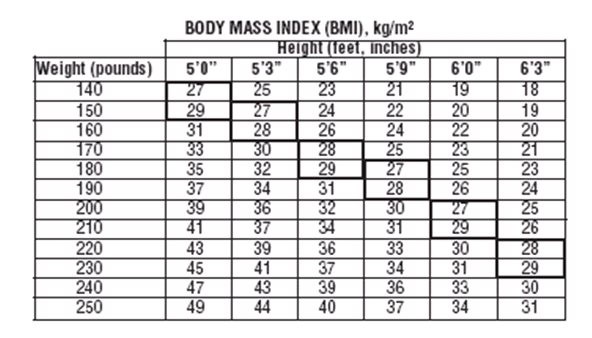
Benzphetamine Hydrochloride Tablets are indicated in the management of exogenous obesity as a short term (a few weeks) adjunct in a regimen of weight reduction based on caloric restriction in patients with an initial body mass index (BMI) of 30 kg/m2 or higher who have not responded to appropriate weight reducing regimen (diet and/or exercise) alone. Below is a chart of Body Mass Index (BMI) based on various heights and weights. BMI is calculated by taking the patient's weight, in kilograms (kg), divided by the patient's height, in meters (m), squared. Metric conversions are as follows: pounds ÷2.2 = kg; inches × 0.0254 = meters. The limited usefulness of agents of this class (See CLINICAL PHARMACOLOGY ) should be weighed against possible risks inherent in their use such as those described below.
Benzphetamine Hydrochloride Tablets are indicated for use as monotherapy only.
DOSAGE AND ADMINISTRATION
Dosage should be individualized according to the response of the patient. The suggested dosage ranges from 25 to 50 mg one to three times daily. Treatment should begin with 25 to 50 mg once daily with subsequent increase in individual dose or frequency according to response. A single daily dose is preferably given in mid-morning or mid-afternoon, according to the patient's eating habits. In an occasional patient it may be desirable to avoid late afternoon administration. Use of benzphetamine hydrochloride is not recommended in individuals under 17 years of age.
CONTRAINDICATIONS
Benzphetamine Hydrochloride Tablets are contraindicated in patients with advanced arteriosclerosis, symptomatic cardiovascular disease, moderate to severe hypertension, hyperthyroidism, known hypersensitivity or idiosyncrasy to sympathomimetic amines, and glaucoma. Benzphetamine should not be given to patients who are in an agitated state or who have a history of drug abuse.
Hypertensive crises have resulted when sympathomimetic amines have been used concomitantly or within 14 days following use of monoamine oxidase inhibitors. Benzphetamine Hydrochloride Tablets should not be used concomitantly with other CNS stimulants.
Benzphetamine Hydrochloride Tablets may cause fetal harm when administered to a pregnant woman. Amphetamines have been shown to be teratogenic and embryotoxic in mammals at high multiples of the human dose. Benzphetamine Hydrochloride Tablets are contraindicated in women who are or may become pregnant. If this drug is used during pregnancy, or if the patient becomes pregnant while taking this drug, the patient should be apprised of the potential hazard to the fetus.
ADVERSE REACTIONS
The following have been associated with the use of benzphetamine hydrochloride:
Cardiovascular
Palpitation, tachycardia, elevation of blood pressure.
There have been isolated reports of cardiomyopathy and ischemic cardiac events associated with chronic amphetamine use.
Valvular heart disease associated with the use of some anorectic agents such as fenfluramine and dexfenfluramine, both independently and especially when used in combination with other anorectic drugs, have been reported. However, no cases of this valvulopathy have been reported when benzphetamine hydrochloride tablets have been used alone.
CNS
Overstimulation, restlessness, dizziness, insomnia, tremor, sweating, headache; rarely, psychotic episodes at recommended doses; depression following withdrawal of the drug.
Gastrointestinal
Dryness of the mouth, unpleasant taste, nausea, diarrhea, other gastrointestinal disturbances.
Allergic
Urticaria and other allergic reactions involving the skin.
Endocrine
Changes in libido.
Drug Interactions
Efficacy of benzphetamine hydrochloride tablets in combination with other anorectic agents has not been studied and the combined use may have the potential for serious cardiac problems.
Hypertensive crises have resulted when sympathomimetic amines have been used concomitantly or within 14 days following use of monoamine oxidase inhibitors. Benzphetamine should not be used concomitantly with other CNS stimulants.
Amphetamines may decrease the hypotensive effect of antihypertensives. Amphetamines may enhance the effects of tricyclic antidepressants.
Urinary alkalinizing agents increase blood levels and decrease excretion of amphetamines. Urinary acidifying agents decrease blood levels and increase excretion of amphetamines.
DESCRIPTION
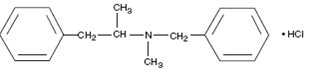
Benzphetamine Hydrochloride Tablets contain the anorectic agent benzphetamine hydrochloride. Benzphetamine hydrochloride is a white crystalline powder readily soluble in water and 95% ethanol. The chemical name for benzphetamine hydrochloride is d -N, α-Dimethyl-N-(phenylmethyl)-benzeneethanamine hydrochloride and its molecular weight is 275.82.
The structural formula (dextro form) is represented below:
Each film-coated tablet, for oral administration, contains 50 mg of benzphetamine hydrochloride. In addition, each film-coated tablet contains the following inactive ingredients: crospovidone, carnauba wax, FD&C Red #40, FD&C Yellow #6, hypromellose, lactose monohydrate, magnesium stearate, microcrystalline cellulose, polyethylene glycol/macrogol, silicon dioxide, and titanium dioxide.
CLINICAL PHARMACOLOGY
Benzphetamine hydrochloride is a sympathomimetic amine with pharmacologic activity similar to the prototype drugs of this class used in obesity, the amphetamines. Actions include central nervous system stimulation and elevation of blood pressure. Tachyphylaxis and tolerance have been demonstrated with all drugs of this class in which these phenomena have been looked for. Drugs of this class used in obesity are commonly known as “anorectics” or “anorexigenics”. It has not been established, however, that the action of such drugs in treating obesity is primarily one of appetite suppression. Other central nervous system actions, or metabolic effects, may be involved.
Adult obese subjects instructed in dietary management and treated with “anorectic” drugs, lose more weight on the average than those treated with placebo and diet, as determined in relatively short-term clinical trials.
The magnitude of increased weight loss of drug-treated patients over placebo-treated patients is only a fraction of a pound a week. The rate of weight loss is the greatest in the first weeks of therapy for both drug and placebo subjects and tends to decrease in succeeding weeks. The possible origins of the increased weight loss due to the various drug effects are not established. The amount of weight loss associated with the use of an “anorectic” drug varies from trial to trial, and the increased weight loss appears to be related in part to variables other than the drug prescribed, such as the physician-investigator, the population treated, and the diet prescribed. Studies do not permit conclusions as to the relative importance of the drug and non-drug factors on weight loss.
The natural history of obesity is measured in years, whereas the studies cited are restricted to a few weeks duration; thus, the total impact of drug-induced weight loss over that of diet alone must be considered to be clinically limited.
Pharmacokinetic data in humans are not available.
HOW SUPPLIED
Benzphetamine Hydrochloride Tablets, 50 mg are round biconvex, pink film-coated tablets, debossed with "Є" to the left side of bisect, and “81” to the right of bisect on one side, plain on the other side. They are available in bottles of:
30 NDC 42806-081-30
100 NDC 42806-081-01
500 NDC 42806-081-05
Store at controlled room temperature 20° to 25° C (68° to 77° F). [see USP Controlled Room Temperature]. Dispense in a tight, light-resistant container as defined in the USP, with a child-resistant closure (as required).
Manufactured by:
Epic Pharma, LLC
Laurelton, NY 11413
Manufactured in USA
Rev. 06-2023-00
MF081REV06/23
OE1322
